Showing posts with label gini coefficient. Show all posts

09 October 2010

Thought experiment in economics from biology

Since discovering Ludwig von Mises, Ayn Rand and Karl Marx's Das Kapital, I've been interested in economics. In a previous post, I claimed that the big hurdle in South Africa's economic environment is transaction cost. This is due to the dismal results of the state intervention in the economy and the conclusion of Coase's Theorem.

Yet we as humans still have to abide by the laws of the jungle since we are at our roots animals and nothing more. This made me wonder if some known biological phenomena could apply to the economic environment of human beings. Two such phenomena are the paradox of enrichment and the paradox of pesticides.

Socialism, Social democracy, Communism and its aims


The difference between these is of degree and not of ideology. All of these aim for the greatest common good. The methods that they employ are geared towards creating a classless society where decisions are taken from a centralised point in order to benefit the majority. Traditionally, this means applying some Robin Hood tactic, whereby the rich are taxed to payroll the poor in a variety of means and equality is enforced, whatever the costs. Resources are thus gathered and rationed by the government, meaning you'd have to be nuts to work hard and gather resources if the government just takes it and gives it to those who don't cooperate.
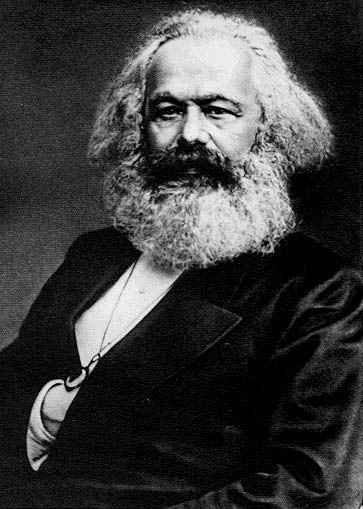
Karl Marx socialism communism das kapital naomi klein
Karl Marx. So what if his ideologies caused the suffering and death of millions? He has a great big bushy beard.

Somehow the distinction between governmental and non-governmental classes is not deemed a paradox when the government is established by a Pop Idols style popularity contest called democracy. This also makes a socialist/communist system acceptable because the greedy money grabbers who make up the majority of the population voted what is to be done with rich people's money.

The paradox of enrichment


The paradox of enrichment is a phenomenon in population ecology whereby increasing the food supply of prey has the undesired effect of also increasing the food supply of its predators. This is because giving more resources to a certain kind of prey causes its numbers to increase, which also inadvertently results in more food and resources for its predators. The predator numbers may increase beyond control and they may even cause the extinction of the prey. Thus, making things more comfortable for prey does not necessarily equate to taking care of its best interests.

The paradox of pesticides


Suggest then that you are a rich bitch and you aren't too happy with being taxed towards the breadline in order to feed the mouths of the barely literate. The solution is obviously to cull the numbers of the 'prey'. You'd need some kind of pauper pesticide because that would get rid of the spongers and moochers, right?

The paradox of pesticides occurs when a pest is given a pesticide and its numbers dwindle, but this inadvertently causes a decrease in the food supply of its predators. Thus, a pesticide may actually increase the numbers of a given pest in the long run due to dwindling natural predator numbers.

Princes and paupers by means of analogy


Suggest that the Gini coefficient gives you an indication of how the predators are distinguished from the prey in your economic population (it's not a good indicator but it's the one in common use).

If you were a pauper, your solution would be to move this coefficient more towards a straight diagonal line. Yet this puts you in danger of inadvertently increasing the number of princes who could exploit the paupers, so you'd be at the mercy of the paradox of enrichment.

Suggest that you'd rather be a prince, then your solution would be to edge the line more towards the bulging side. Yet this may drop you in the clutches of the paradox of pesticides, as there are less paupers to exploit.

What does this tell us about human economics?


Both paradoxes are a result of a third party that is above the laws of both predator and prey but that serves as a kind of referee of the entire system. Thus, humans who administer pesticides or who protect prey are inadvertently causing an imbalance in the natural, optimal equilibrium. Throughout nature - and throughout even human society for as long as we are organic beings - there is but one general law:

Charles Darwin evolution social darwinism
One general law, leading to the advancement of all organic beings, namely, multiply, vary, let the strongest live and the weakest die. - Charles Darwin

Of course this argument only applies if it were true that the rich get rich at the expense of the poor, namely if the 'rich get richer while the poor get poorer' statement isn't complete crap. If you believe that this isn't complete crap, the paradox of enrichment and the paradox of pesticides trap you at an equilibrium somewhere in a scenario where rich people are rich and poor people are poor anyway.

It is thus futile to allow a third party that is independent to interfere with processes that do not affect it directly. Like they say: in the bacon and eggs equilibrium, the chicken is involved but the pig is committed.

This reminds me of the debate on the disgraced Media Tribunal, which is meant to be an independent statutory body (stop laughing, the South African government is really under the impression that it can appoint an independent statutory body) that has to take care of the predator-prey dynamics of a system where it is only involved, and not committed.

Whether government is happy about it or not, a self-regulatory system really is the best possible system for as long as we are organic beings. The only logical conclusion is that beer should be our currency.

14 May 2010

What does the Gini coefficient mean?

The Gini coefficient is often cited by politicians and other socialists to highlight income inequalities. Usually, it is meant to invoke a moral judgement concerning income gaps, thereby justifying government intervention in the economy in a Keynesian manner. This is exactly where the Gini coefficient is abused for ulterior motives.

Bust of Voltaire from  Wikipedia

Whatever you do, crush the infamous thing, and love those who love you. - Voltaire, who rocks and not just because he is a bust.

What is the Gini coefficient?


The Gini coefficient is a measure of income inequality. There are two assumptions here with regards to income inequality, namely:
  • Complete income equality is when everyone receives an equal income. This state lies on one end of the scale and is represented by a Gini coefficient of 0.

  • Complete income inequality is when one person or entity receives all income, while the rest receives none. This state lies on the opposite end of the scale and is represented by a Gini coefficient of 1.


The Gini coefficient is obtained by plotting the Lorentz curve (representing actual income distribution) to the normal distribution line (representing the ideal income distribution where everyone receives the same amount of income).

This sounds confusing, but it isn't. The Gini coefficient is simply a measure of how far the actual income distribution is from the line of perfect income equality.

What moral implications does the Gini coefficient have?


None whatsoever. The Gini coefficient simply states things as they are, even though its value may be distorted to suit your particularly malignant political purpose. The reason why I claim that there cannot be any moral scrutiny forthcoming from the Gini coefficient becomes apparent when one looks at the list of countries by income inequality.

Some deductions from the list of countries by income inequality


The first observation is the slight difference between the UN figures and the CIA figures for the Gini index. The first 30 figures for the UN index have a median of 38, while the same first 30 figures for the CIA index have a median of 40,25. How is this possible? This discrepancy may be the result of the proportions of quantiles used to calculate the Gini coefficient.

Suggest that both the CIA and the UN had the same data sets. If the CIA used a lower granularity than the UN (in other words, less quantiles, or less squares on their grid), their Gini coefficient would usually be lower than the Gini coefficient of the UN. If you want to prove to your country that your economic policies are bringing about more income equality, you should use lower granularity.

Yet if the CIA used higher granularity than the UN (in other words more quantiles, or more squares on their grid), the Gini coefficient would typically be higher than that of the UN. If you were running a presidential campaign and you'd like to show your potential voters how the previous regime has failed, you could show them a Gini coefficient calculated with higher granularity.

Note that the same data set here could give widely different figures, while the actual income distribution has not changed one bit. This is why a Gini coefficient cited without describing the proportions of the quantiles used is a meaningless number that is better than a thumb suck number at a ratio of 1 to 0,999....

The second observation is less apparent, but it is obtained by comparing the Gini coefficients with the United Nations Human Development Index. Note that the Gini coefficient data I used here are from various years, while the Human Development Index data is from 2007. Regardless, there is no correlation between the level of human development and the Gini coefficient.

It becomes clear that the Gini coefficient is not a reliable measure to use when one is trying to give an impression of the current state of affairs of the general household in a given population. What then is the use of the Gini coefficient?

What is the use of the Gini coefficient?


Having a state of affairs where a brain surgeon, a rocket scientist and a waiter all receive the same wage is not a desirable one. This is because transporting beverages does not really require the amount of mental strain, education, training and strong character that is required to obtain a PhD in physics or medicine.

Naturally, the opposite side of the spectrum, where one institute enjoys all the income while nobody else shares in the spoils of the gravy train is a kleptocracy. This is not a desirable state of affairs either. The safest road is usually in the middle. Intuitively, we deduce that a Gini index of around 0,5 is the most equal in that it is fair towards brain surgeons, rocket scientists and waiters, all things being equal.

Economic development and how it relates to the Gini coefficient


Simon Kuznet discovered that - contrary to the interpretation often cited by hysterical politicians - a developing country often shows a decline in Gini coefficient index. This makes perfect sense because some people would start earning more while others would still earn the same, or less. This is a good sign, as it means development is taking place. Furthermore, Kuznet claims that the Gini coefficient reaches a maximum, after which the income inequality begins to decrease as more people work themselves into higher income groups.

Thus, citing a high Gini coefficient for a country like South Africa, and noting that it has increased since 1994, is actually good news as it shows that the country is developing. A high Gini coefficient could thus be good news or bad news, depending on the current level of development in the cited population. Once again we see that a Gini coefficient by itself is nothing but a number.

What is the ideal Gini coefficient?


According to econometrics, the ideal Gini coefficient lies between 0,25 and 0,40. This is because at a level where brain surgeons, rocket scientists and waiters all receive the same wage, there is no financial incentive to study physics or neuroscience. Similarly, at levels where income inequality is too high, the ownership disputes and social incoherence affect development negatively. Private property and other human rights cannot be guaranteed to last where a government can decide to say, nationalise mines and disrupt productive farms after sniffing too many beer farts in a shebeen.

South Africa had a Gini index of 0,65 in 2005, according to the CIA. Instead of requiring the government to act to bring this Gini coefficient down for its own sake, it is perhaps a better idea to start focussing on the implications of such a high Gini coefficient, namely:
  • Incentive traps: who gets the incentive from FIFA and Eskom's new power stations? Wouldn't it aid development - and by implication our high Gini coefficient - more positively if South Africa sidestepped the government in these matters entirely?

  • Erosion of social cohesion: The ongoing genocide of white South Africans is still largely being ignored by the South African government and the media. Kill the Boer and other struggles against reality songs are not aiding in creating social cohesion in South Africa. The longer the government pussyfoots with dealing with these hate speech instances, the more murky the social cohesion becomes.

  • Social conflicts: Black economic empowerment has failed because it is a racist employment policy. Getting rid of double standards such as BEE would go far further to bringing down the Gini coefficient of South Africa than more government intervention in the economy ever could.

  • Uncertain property rights: South Africans should insist on unequivocal and very real support of its constitution by our government. There cannot even be a debate about nationalisation of our mines or land grabs Zimbabwe style because these matters bring about uncertainty about property rights. In return, those with resources are not going to invest in South Africa simply because their property rights here are uncertain. If there were certainty regarding property rights, the Gini coefficient would come down as more resources would flow into South Africa and more would stay here!


Conclusion


Next time you read a Gini coefficient thrown around like an absolute, simply enquire as to the granularity of the quantiles. If the author or speaker cannot answer you, chances are they read about a terribly high Gini coefficient on Wikipedia and are trying to create their own moral panic. It is imperative that a Gini coefficient be contextualised properly before it has any meaning whatsoever, as a number by itself is nothing but a number. A high Gini coefficient could be a very good thing, or a very bad thing, but it does not correlate with a desirable state of human development or with economic development.

Further reading


Google sucks piles I'm moving to Steemit

Short and sweet, Google isn't allowing me to post ads on my blogs here on blogspot any longer. Not that I provide my angry nerd rants fo...