Showing posts with label ayn rand. Show all posts

09 October 2010

Thought experiment in economics from biology

Since discovering Ludwig von Mises, Ayn Rand and Karl Marx's Das Kapital, I've been interested in economics. In a previous post, I claimed that the big hurdle in South Africa's economic environment is transaction cost. This is due to the dismal results of the state intervention in the economy and the conclusion of Coase's Theorem.

Yet we as humans still have to abide by the laws of the jungle since we are at our roots animals and nothing more. This made me wonder if some known biological phenomena could apply to the economic environment of human beings. Two such phenomena are the paradox of enrichment and the paradox of pesticides.

Socialism, Social democracy, Communism and its aims


The difference between these is of degree and not of ideology. All of these aim for the greatest common good. The methods that they employ are geared towards creating a classless society where decisions are taken from a centralised point in order to benefit the majority. Traditionally, this means applying some Robin Hood tactic, whereby the rich are taxed to payroll the poor in a variety of means and equality is enforced, whatever the costs. Resources are thus gathered and rationed by the government, meaning you'd have to be nuts to work hard and gather resources if the government just takes it and gives it to those who don't cooperate.
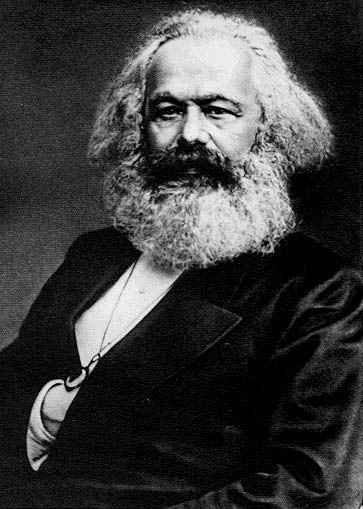
Karl Marx socialism communism das kapital naomi klein
Karl Marx. So what if his ideologies caused the suffering and death of millions? He has a great big bushy beard.

Somehow the distinction between governmental and non-governmental classes is not deemed a paradox when the government is established by a Pop Idols style popularity contest called democracy. This also makes a socialist/communist system acceptable because the greedy money grabbers who make up the majority of the population voted what is to be done with rich people's money.

The paradox of enrichment


The paradox of enrichment is a phenomenon in population ecology whereby increasing the food supply of prey has the undesired effect of also increasing the food supply of its predators. This is because giving more resources to a certain kind of prey causes its numbers to increase, which also inadvertently results in more food and resources for its predators. The predator numbers may increase beyond control and they may even cause the extinction of the prey. Thus, making things more comfortable for prey does not necessarily equate to taking care of its best interests.

The paradox of pesticides


Suggest then that you are a rich bitch and you aren't too happy with being taxed towards the breadline in order to feed the mouths of the barely literate. The solution is obviously to cull the numbers of the 'prey'. You'd need some kind of pauper pesticide because that would get rid of the spongers and moochers, right?

The paradox of pesticides occurs when a pest is given a pesticide and its numbers dwindle, but this inadvertently causes a decrease in the food supply of its predators. Thus, a pesticide may actually increase the numbers of a given pest in the long run due to dwindling natural predator numbers.

Princes and paupers by means of analogy


Suggest that the Gini coefficient gives you an indication of how the predators are distinguished from the prey in your economic population (it's not a good indicator but it's the one in common use).

If you were a pauper, your solution would be to move this coefficient more towards a straight diagonal line. Yet this puts you in danger of inadvertently increasing the number of princes who could exploit the paupers, so you'd be at the mercy of the paradox of enrichment.

Suggest that you'd rather be a prince, then your solution would be to edge the line more towards the bulging side. Yet this may drop you in the clutches of the paradox of pesticides, as there are less paupers to exploit.

What does this tell us about human economics?


Both paradoxes are a result of a third party that is above the laws of both predator and prey but that serves as a kind of referee of the entire system. Thus, humans who administer pesticides or who protect prey are inadvertently causing an imbalance in the natural, optimal equilibrium. Throughout nature - and throughout even human society for as long as we are organic beings - there is but one general law:

Charles Darwin evolution social darwinism
One general law, leading to the advancement of all organic beings, namely, multiply, vary, let the strongest live and the weakest die. - Charles Darwin

Of course this argument only applies if it were true that the rich get rich at the expense of the poor, namely if the 'rich get richer while the poor get poorer' statement isn't complete crap. If you believe that this isn't complete crap, the paradox of enrichment and the paradox of pesticides trap you at an equilibrium somewhere in a scenario where rich people are rich and poor people are poor anyway.

It is thus futile to allow a third party that is independent to interfere with processes that do not affect it directly. Like they say: in the bacon and eggs equilibrium, the chicken is involved but the pig is committed.

This reminds me of the debate on the disgraced Media Tribunal, which is meant to be an independent statutory body (stop laughing, the South African government is really under the impression that it can appoint an independent statutory body) that has to take care of the predator-prey dynamics of a system where it is only involved, and not committed.

Whether government is happy about it or not, a self-regulatory system really is the best possible system for as long as we are organic beings. The only logical conclusion is that beer should be our currency.

01 October 2009

Metacritique of "The Objectivist Ethics"

The following responds to a critique of "The Objectivist Ethics". Regular readers might have guessed that I am a bit of a Randroid. My numbering corresponds to the numbering of the author. To follow things smoothly, you have to read the critique and my metacritique next to each other.

1. Rand's argument


Objection to i
The fact that Ayn Rand does not offer an argument for 1 does not make it false. This piece does not offer a counter argument. That besides, Ayn Rand bases Objectivism on axioms. Per definition, axioms are not proven but assumed to be true.

Objection to ii
The alternatives need to be there for either schools of value to be satisfied. Absolute good is in contrast with less good options, relative good is in contrast with other worse options. A million US dollars, or South African Rand, has to be compared with something of lesser value (a million Zimbabwean Dollars, for instance) to be considered valuable.

Objection to iii
Non-living things cannot make value judgements as far as we know. This is the point of the fact that they cannot face alternatives: they cannot choose to be living things. We can.

Objection to iv
These two interpretations, oddly enough, seem to reinforce the idea that value has to be of value to someone. Value as a verb implies an agent that values. Value as an absolute implies comparison with less valuable or more valuable things, which begs the question valuable to whom? This again implies an agent that compares.

Objection to v
The implicit premise 7 is derived incorrectly.

Rand's premise: 6. Every living thing acts to maintain its life, for its own sake.
The author's implied premise: 7. There is no other thing that they act to gain or keep for its own sake.

In other words, agent does x because of y. This does not mean that an agent can't do z because of y (or an agent can't do other things merely for their own sake). Rather, Rand's implied premise seems to be that an agent cannot do x because of z (namely an agent cannot act to maintain itself for the sake of someone else), not that there are no other things that agents do for their own sake.

The author focuses on this incorrect premise 7, thus v is a classic strawman argument. It is important to read the entire 6 and to understand that agents act to maintain themselves for their own sake. v claims that this implies innate values, which it does not. As per 2 and 3, Rand claims that agents choose among alternatives according to what they value. Thus, values cannot be innate as instinct. They are a result of volition. Rocks cannot act to satisfy value systems, regardless of the value their kinetic energy might have to us.

Objection to vi
This breaks up 6 and gets lost in semantics. Again, 6 claims agents maintain themselves for themselves. Nothing more.

Objection to vii
This again focuses on the incorrectly derived premise 10. Rand stated that an agent's life is its ultimate value, at the heart of its values. This is why Rand stated that life is valuable for its own sake. It is thus rational to act in order to promote life. The derived premise states that Rand claimed it is rational to act in order to promote one's values. This does not follow from Rand's statements (unless one's values are necessarily in tune with promoting one's life), as Rand claimed that values are volition.

You may choose to have any values whatsoever, and acting to satisfy them is not necessarily tantamount to promoting your life. Rand claimed that it is rational to act to promote your life, therefore you should choose values accordingly. NOT that you should act to promote your values. If this were true and your values were not chosen to promote your life, your values - and not your life - would have the ultimate value.

vii begs the question why is it rational to act to satisfy values, if they do not promote your own life? This, I belief, is the point Rand was trying to make. We should, therefore, act to promote our own lives, and allow others to act to promote their own lives. This is the real meaning of altruism: to allow agents to live for their own sake and not to require other agents to live for your own sake, or to live for the sake of others.

Objection to viii
Another strawman argument. Rand did not claim that living without 100% reason results in instant death. She merely claimed that we as agents should be allowed to use our ultimate survival tool, namely reason. Reason here refers to acting in your own best interest in order to maintain your life, and allowing others the same course of action. This because the assumption is that life has value for agents, for its own sake.

3. General arguments against ethical egoism


This argument does not follow from Objectivist ethics. This argument begs the question who is forcing you to torture 500 people for the benefit of a dime? This scenario implies the absence of volition, which means Objectivist values do not apply.

4. Attacking straw men


Rand never claimed that moral values are arbitrary. Rand claimed that values should be based on that which keeps you alive. This is hardly arbitrary.

By the metaphysical nature of man and of existence, man has to maintain his life by his own effort; the values he needs—such as wealth or knowledge—are not given to him automatically, as a gift of nature, but have to be discovered and achieved by his own thinking and work. - Ayn Rand, Wikiquote.

This contradicts what the author claims about Rand's values. Another strawman argument, based on the incorrectly derived premise 7, which as discussed was not Rand's implied premise but of the author's own invention.

5. Man qua man and fudge words


Rand never claimed that life is a state of not being dead. On the contrary, to claim this is to miss the entire point of egoism. With Man Qua Man, Rand claimed this:

Man—every man—is an end in himself, not a means to the ends of others; he must live for his own sake, neither sacrificing himself to others nor sacrificing others to himself; he must work for his rational self-interest, with the achievement of his own happiness as the highest moral purpose of his life. - Ayn Rand, Wikiquote.

The author again conducts a strawman argument by claiming Rand claims Life Qua Existence (which is the kind of Latin that Monty Python would probably not approve), and neglecting the basic purpose of Objectivist ethics, namely happiness.

Simply being alive is thus not the same as Rand's notions of acting in a rational manner to promote living in happiness.

6. Rand's intuitions


That is why there are no divergent views about mathematical theorems--when Euclid wrote his Elements, no one disagreed with it or presented arguments against it. That's because Euclid had actually proved his theorems.

Mathematics isn' t my field, but as far as I understand there is actually quite a bit of controversy concerning the axioms of mathematics. Particularly Euclid's axioms, which falls apart when gravity becomes too strong, becoming a mere approximation of physical space.

Besides, Euclid' s theorems are proved in exactly the same manner that Ayn Rand proved her Objectivist ethics, namely by defining axioms (self-evident truths) and arguing from them. Euclid never actually proved his axioms either, which is why they are called axioms.

If Euclidean geometry were so uncontroversial, why do we need Non-Euclidean geometry?

When we confront this sort of thing, it is imperative that we remember that Rand gave no argument for ethical egoism. She assumed egoism, discussed other propositions at some length, and then said that she proved it.

Again, not true. Rand proposed certain axioms and argued for egoism from these axioms. In this manner, Rand's theorems are proved just as much as Euclid' s theorems are proved, with the validity depending on the validity of the underlying axioms.

Now, I am not saying this means the concepts are illegitimate, nor does this, by itself, show that her argument is wrong (though the objections I raised in section 2 do).

The author does not claim that Rand was wrong, just that Rand was not right. What exactly does the author claim then? How do the objections raised in section 2 swing this either way?

The author in question focuses on absolute self-interest (more akin to selfishness), and neglects to consider the term 'rational self-interest' as a whole. The author does not actually critique Objectivist Ethics (which argues for rational self-interest) at all, but argues against irrational self-interest at the expense of another agent's rational self-interest. The irony is that altruism presumes it is noteworthy to act in the best interest of others, except if others want to act in their own best interest, as this would be selfish. Thus, under altruism, it is impossible to act in anybody's best interest, as nobody else can know your best interest, and acting in your own best interest is not selfless and thus not altruistic.

Google sucks piles I'm moving to Steemit

Short and sweet, Google isn't allowing me to post ads on my blogs here on blogspot any longer. Not that I provide my angry nerd rants fo...