Showing posts with label Charles Darwin. Show all posts

09 October 2010

Thought experiment in economics from biology

Since discovering Ludwig von Mises, Ayn Rand and Karl Marx's Das Kapital, I've been interested in economics. In a previous post, I claimed that the big hurdle in South Africa's economic environment is transaction cost. This is due to the dismal results of the state intervention in the economy and the conclusion of Coase's Theorem.

Yet we as humans still have to abide by the laws of the jungle since we are at our roots animals and nothing more. This made me wonder if some known biological phenomena could apply to the economic environment of human beings. Two such phenomena are the paradox of enrichment and the paradox of pesticides.

Socialism, Social democracy, Communism and its aims


The difference between these is of degree and not of ideology. All of these aim for the greatest common good. The methods that they employ are geared towards creating a classless society where decisions are taken from a centralised point in order to benefit the majority. Traditionally, this means applying some Robin Hood tactic, whereby the rich are taxed to payroll the poor in a variety of means and equality is enforced, whatever the costs. Resources are thus gathered and rationed by the government, meaning you'd have to be nuts to work hard and gather resources if the government just takes it and gives it to those who don't cooperate.
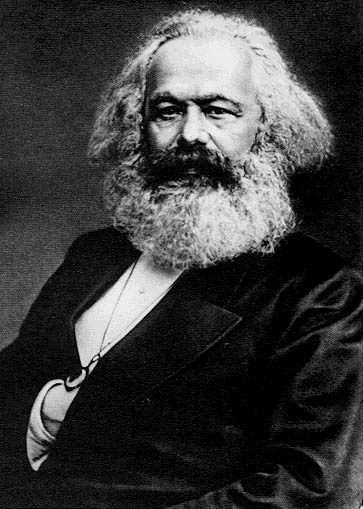
Karl Marx socialism communism das kapital naomi klein
Karl Marx. So what if his ideologies caused the suffering and death of millions? He has a great big bushy beard.

Somehow the distinction between governmental and non-governmental classes is not deemed a paradox when the government is established by a Pop Idols style popularity contest called democracy. This also makes a socialist/communist system acceptable because the greedy money grabbers who make up the majority of the population voted what is to be done with rich people's money.

The paradox of enrichment


The paradox of enrichment is a phenomenon in population ecology whereby increasing the food supply of prey has the undesired effect of also increasing the food supply of its predators. This is because giving more resources to a certain kind of prey causes its numbers to increase, which also inadvertently results in more food and resources for its predators. The predator numbers may increase beyond control and they may even cause the extinction of the prey. Thus, making things more comfortable for prey does not necessarily equate to taking care of its best interests.

The paradox of pesticides


Suggest then that you are a rich bitch and you aren't too happy with being taxed towards the breadline in order to feed the mouths of the barely literate. The solution is obviously to cull the numbers of the 'prey'. You'd need some kind of pauper pesticide because that would get rid of the spongers and moochers, right?

The paradox of pesticides occurs when a pest is given a pesticide and its numbers dwindle, but this inadvertently causes a decrease in the food supply of its predators. Thus, a pesticide may actually increase the numbers of a given pest in the long run due to dwindling natural predator numbers.

Princes and paupers by means of analogy


Suggest that the Gini coefficient gives you an indication of how the predators are distinguished from the prey in your economic population (it's not a good indicator but it's the one in common use).

If you were a pauper, your solution would be to move this coefficient more towards a straight diagonal line. Yet this puts you in danger of inadvertently increasing the number of princes who could exploit the paupers, so you'd be at the mercy of the paradox of enrichment.

Suggest that you'd rather be a prince, then your solution would be to edge the line more towards the bulging side. Yet this may drop you in the clutches of the paradox of pesticides, as there are less paupers to exploit.

What does this tell us about human economics?


Both paradoxes are a result of a third party that is above the laws of both predator and prey but that serves as a kind of referee of the entire system. Thus, humans who administer pesticides or who protect prey are inadvertently causing an imbalance in the natural, optimal equilibrium. Throughout nature - and throughout even human society for as long as we are organic beings - there is but one general law:

Charles Darwin evolution social darwinism
One general law, leading to the advancement of all organic beings, namely, multiply, vary, let the strongest live and the weakest die. - Charles Darwin

Of course this argument only applies if it were true that the rich get rich at the expense of the poor, namely if the 'rich get richer while the poor get poorer' statement isn't complete crap. If you believe that this isn't complete crap, the paradox of enrichment and the paradox of pesticides trap you at an equilibrium somewhere in a scenario where rich people are rich and poor people are poor anyway.

It is thus futile to allow a third party that is independent to interfere with processes that do not affect it directly. Like they say: in the bacon and eggs equilibrium, the chicken is involved but the pig is committed.

This reminds me of the debate on the disgraced Media Tribunal, which is meant to be an independent statutory body (stop laughing, the South African government is really under the impression that it can appoint an independent statutory body) that has to take care of the predator-prey dynamics of a system where it is only involved, and not committed.

Whether government is happy about it or not, a self-regulatory system really is the best possible system for as long as we are organic beings. The only logical conclusion is that beer should be our currency.

28 January 2009

Problem Solving with Darwin

Genetic Algorithms are a way of solving problems by mimicking the same processes mother nature uses. They use the same combination of selection, recombination and mutation to evolve a solution to a problem.
[AI Junkie Genetic Algorithm Tutorial]

Claudia Schiffer has still not shown herself. I'm beginning to believe that the Law of Attraction is nothing but a farce. They certainly had me fooled, but as George Bush once said: "There's an old saying in Tennessee — I know it's in Texas, probably in Tennessee — that says: Fool me once, shame on — shame on you. Fool me — you can't get fooled again." Something about the shoe being on the other foot in your mouth now.

George Bush, George W Bush
George Bush. Living proof that mutation is random and we're definitely not intelligently designed.

If the Law of Attraction is not a good problem solving strategy - and that's a big if, I mean the Law of Attraction seems so plausible, especially when you critically evaluate its claims - then what is? This depends largely on the kind of problems you want to solve.

What kind of problems can you solve with the Law of Attraction?


I'm convinced that the Law of Attraction is not a solution, but a symptom of far greater problems bubbling below the surface. Regardless, most people who employ the Law of Attraction wrestle with questions posed by an existential crisis, unrequited love, dashed dreams, shattered hopes, a quarter-life crisis, a mid-life crisis or the ponies they didn't get for Christmas. While ponies posing questions, or a grown man wrestling with a pony might be amusing to some (especially those who produce or purchase snuff films), humorous charades are not part of the solution I had in mind.

These problems have some of the following characteristics in common:
  • The search space is incredibly large, clearly misunderstood or overwhelmingly complex.

  • It is difficult to employ expert knowledge to narrow the search space. Dr Phil is not going to help beyond asking you how you feel about it.

  • A mathematical analysis is unavailable. Q: What should I study? A: 42. Doesn't make sense, does it?

  • More traditional search methods for solutions to the problems have failed.

Fortunately, mother nature has already solved problems of this kind for millions of years. Darwin described some of her methods accurately and the field of computer science took his description and encoded it as a simple algorithm that helps to solve problems of this nature.

A Genetic Algorithm in Pseudocode


  1. Generate an initial population.

  2. Determine the fitness of each candidate in the population.

  3. Wash, rinse and repeat these steps until a sufficient solution is found:
    1. Select the candidates with the highest rating for reproduction.

    2. Breed a new generation through crossover and mutation.

    3. Discard the worst ranking members of the population.


That might seem like Geek to you, and in fact it is. Rest assured, I will help cast light on the subject by giving you a walkthrough illustrating how you can use mother nature's own problem solving algorithm to solve your problems. Not all your problems. That rash is not going to go away with this. Sorry.

A Walkthrough to Illustrate Problem Solving with Darwin


Given a perplexing problem: What should you study?
  1. Generate an initial population. In this instance, you can write down a list of fields you have ever considered in your life. If you can't think of twenty, get a brochure from a tertiary institute and randomly write down a list of courses from it. You can pick any number, but don't make the initial number too small.

  2. Determine the fitness of each candidate in the population. The way you determine the fitness of each course is up to you. It is however important to attach a numerical value to each course. You can give each course a rating on a scale of one to ten, for instance.

  3. Repeat these steps until you have only one item left on your list:
    1. Select the candidates with the highest rating for reproduction. This means you pick all the ones closest to ten for breeding.

    2. Breed a new generation through crossover and mutation. Crossover means you take properties of one course and combine it with properties of another course and see if there is such a course in the brochure. You'd rather take that course than the other two and give it a higher rating (plus one, unless it is already ten, then its rating just stays at ten).

      Mutation means you alter a course slightly. Suggest you had biochemistry as a course. Now you slightly alter it to become anatomy and physiology. Of course, this is subjective. If you'd still prefer to rather do biochemistry than anatomy and physiology, then rather keep biochemistry and discard the mutation. That's one advantage you have over mother nature: you can design your population intelligently.

      How do you choose when to mutate and when to crossover? This is also subjective. You could mutate every third course on your list, unless it is one you already feel strongly attached to, then just mutate the one immediately after it. You could crossover every item divisible by four and its immediate predecessor. You could decide to only mutate one round, and only crossover the next round. You can be as random as you like - it works for mother nature - but don't alter your population too much during each round. Mother nature doesn't condone bootstrapping.

    3. Discard the worst ranking members of the population. In our example, just delete one item from the list after each round. If you arrive at a scenario where all the lowest ranking items have a similar number, pick the course you like the least and delete it. If you can't decide, flip a coin.


Does This Really Work?


Surprisingly, yes it does. The list of applications for genetic algorithms on Wikipedia contains among others:
  • Training artificial neural networks when pre-classified training examples are not readily obtainable

  • Scheduling applications, including job-shop scheduling.

  • Selection of optimal mathematical model to describe biological systems.

  • Plant floor layout.

  • Optimisation of data compression systems, for example using wavelets.

  • Linguistic analysis.

  • Electronic circuit design.

  • Container loading optimization.

  • Automated design of sophisticated trading systems in the financial sector.

  • Automated design of industrial equipment.

Some Useful Links


Google sucks piles I'm moving to Steemit

Short and sweet, Google isn't allowing me to post ads on my blogs here on blogspot any longer. Not that I provide my angry nerd rants fo...