Showing posts with label karl marx. Show all posts

05 March 2011

Media Appeals Tribunal has fallen and it can't get up

If you don’t read the newspaper, you’re uninformed; if you do read the newspaper, you’re misinformed. - attributed to Mark Twain.

Since the last Media Appeals Tribunal update on this blog, the Press Council of South Africa held a few public hearings which are designed to garner the general public opinion on the role of the council. Public attendance was poor, as can be expected from any kind of public hearings that are held during working hours.

Mark Twain
Mark Twain. I'm not sure what his ideology was, but it involved satire and drinking so I like it.

The Red Brigade has issued a warning regarding the ideology (or is that idle-LOL-agy?) I am propagating on this blog (they haven't managed to identify this ideology, and neither have I to be honest), but then only Red Brigade ideology and nothing else would make the Red Brigade happy. Due to their misconception that I am trying to advance an ideology that they do not approve, they have given my No Media Tribunal campaign a Cold War shoulder. This groupthink is part of why their group is ineffective.

It also shows that the press is more cognisant of its role as a potential soap box for ideology than its purpose as a source of information, which is the way I'd like it to be. It also shows the inability of particularly ineffective groups to decouple ideology from a medium that is regarded by many as more valuable when it is viewed as free from ideology. Why do we trust Wikileaks more than Fox News as a source of news?

I have been following the press council hearings by proxy, and unfortunately it appears to me that most journalists are more concerned with providing a soap box for some group's ideology than with doing their jobs. This becomes more apparent if one counts the amount of grammatical errors in news headlines on some South African news syndicate web sites. It also explains headlines like this:

Man tells how dog helped him survive


You can find the full story here:
Man tells how dog helped him survive.

To me, this is a story about an elderly gentleman who fell in a valley and could not get up. His dog was nearby and helped him survive, because the poor man fell and could not get up. But apparently I am wrong.

The Plight of Smiling Dog Men who keep on falling and cannot get up


Apparently, it is not enough to note that smiling dog man fell and could not get up. Most South African readers of this bulletin may not be aware of this with their White Privilege and Protestant Work Ethic (of which the press has the duty to remind us of at any opportunity, particularly the Privilege part but preferably not in such a way that we may construe a causal link between the two), but there's a large contingent of disenfranchised old smiling dog men out there who have no voice in the press.

Therefore, self-regulation of the media is not enough when it results merely in monitoring the factual accuracy of news reports and thereby ensuring that journalists are doing their jobs properly.

Nor is it enough to evaluate news reporting in an objective manner by evaluating complaints against the Bill of Rights, the Press Council constitution and against the information available to the journalist by a respected panel of experts.

Nor is it enough to point out that appeal to the Press Council is voluntary and there is no need to even bother with it if you feel that your case has enough merit for legal action. This is the course that Gold Reef City took against Carte Blanche.

Nay, nay, the Press Council should also ensure that we're aware of smiling old dog men in general who have fallen and cannot get up and that it's most likely due to the injustices of the past that smiling dog men keep on falling and cannot get up, as causation is easier to establish in social sciences than in others, you see.

Ideology schmideology


I would prefer a Press Council that conducts language proficiency tests and critical thinking skills evaluations of all journalists. The level of each of these should be indicated at the bottom of each news bulletin that the journalist in question gets published.

Journalists who score too low should be sent on courses to improve both their writing skills and their critical thinking skills. These ratings should be evaluated twice a year, and the scores should be updated accordingly. Anyone who uses the terms disenfranchised, media diversity, ideology or demographic representation and thinks this has any bearing on journalistic standards or the purpose of the Press Council (which is outlined in their constitution, by the way) should be sent on history and economics courses to purge their skulls of the dump that Karl Marx took in their skull cavities.

That would be great, but the purpose of the Press Council is not to do the jobs that educational institutes should have accomplished by the time journalists are let loose in the field.

09 October 2010

Thought experiment in economics from biology

Since discovering Ludwig von Mises, Ayn Rand and Karl Marx's Das Kapital, I've been interested in economics. In a previous post, I claimed that the big hurdle in South Africa's economic environment is transaction cost. This is due to the dismal results of the state intervention in the economy and the conclusion of Coase's Theorem.

Yet we as humans still have to abide by the laws of the jungle since we are at our roots animals and nothing more. This made me wonder if some known biological phenomena could apply to the economic environment of human beings. Two such phenomena are the paradox of enrichment and the paradox of pesticides.

Socialism, Social democracy, Communism and its aims


The difference between these is of degree and not of ideology. All of these aim for the greatest common good. The methods that they employ are geared towards creating a classless society where decisions are taken from a centralised point in order to benefit the majority. Traditionally, this means applying some Robin Hood tactic, whereby the rich are taxed to payroll the poor in a variety of means and equality is enforced, whatever the costs. Resources are thus gathered and rationed by the government, meaning you'd have to be nuts to work hard and gather resources if the government just takes it and gives it to those who don't cooperate.

Karl Marx socialism communism das kapital naomi klein
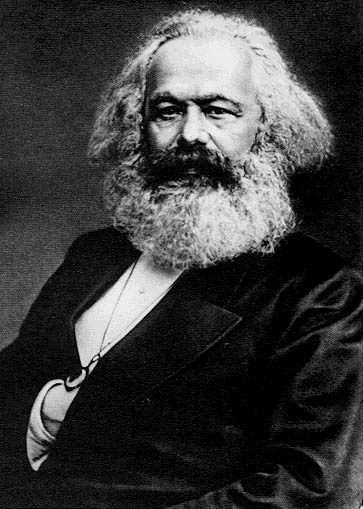
Karl Marx. So what if his ideologies caused the suffering and death of millions? He has a great big bushy beard.

Somehow the distinction between governmental and non-governmental classes is not deemed a paradox when the government is established by a Pop Idols style popularity contest called democracy. This also makes a socialist/communist system acceptable because the greedy money grabbers who make up the majority of the population voted what is to be done with rich people's money.

The paradox of enrichment


The paradox of enrichment is a phenomenon in population ecology whereby increasing the food supply of prey has the undesired effect of also increasing the food supply of its predators. This is because giving more resources to a certain kind of prey causes its numbers to increase, which also inadvertently results in more food and resources for its predators. The predator numbers may increase beyond control and they may even cause the extinction of the prey. Thus, making things more comfortable for prey does not necessarily equate to taking care of its best interests.

The paradox of pesticides


Suggest then that you are a rich bitch and you aren't too happy with being taxed towards the breadline in order to feed the mouths of the barely literate. The solution is obviously to cull the numbers of the 'prey'. You'd need some kind of pauper pesticide because that would get rid of the spongers and moochers, right?

The paradox of pesticides occurs when a pest is given a pesticide and its numbers dwindle, but this inadvertently causes a decrease in the food supply of its predators. Thus, a pesticide may actually increase the numbers of a given pest in the long run due to dwindling natural predator numbers.

Princes and paupers by means of analogy


Suggest that the Gini coefficient gives you an indication of how the predators are distinguished from the prey in your economic population (it's not a good indicator but it's the one in common use).

If you were a pauper, your solution would be to move this coefficient more towards a straight diagonal line. Yet this puts you in danger of inadvertently increasing the number of princes who could exploit the paupers, so you'd be at the mercy of the paradox of enrichment.

Suggest that you'd rather be a prince, then your solution would be to edge the line more towards the bulging side. Yet this may drop you in the clutches of the paradox of pesticides, as there are less paupers to exploit.

What does this tell us about human economics?


Both paradoxes are a result of a third party that is above the laws of both predator and prey but that serves as a kind of referee of the entire system. Thus, humans who administer pesticides or who protect prey are inadvertently causing an imbalance in the natural, optimal equilibrium. Throughout nature - and throughout even human society for as long as we are organic beings - there is but one general law:

Charles Darwin evolution social darwinism
One general law, leading to the advancement of all organic beings, namely, multiply, vary, let the strongest live and the weakest die. - Charles Darwin

Of course this argument only applies if it were true that the rich get rich at the expense of the poor, namely if the 'rich get richer while the poor get poorer' statement isn't complete crap. If you believe that this isn't complete crap, the paradox of enrichment and the paradox of pesticides trap you at an equilibrium somewhere in a scenario where rich people are rich and poor people are poor anyway.

It is thus futile to allow a third party that is independent to interfere with processes that do not affect it directly. Like they say: in the bacon and eggs equilibrium, the chicken is involved but the pig is committed.

This reminds me of the debate on the disgraced Media Tribunal, which is meant to be an independent statutory body (stop laughing, the South African government is really under the impression that it can appoint an independent statutory body) that has to take care of the predator-prey dynamics of a system where it is only involved, and not committed.

Whether government is happy about it or not, a self-regulatory system really is the best possible system for as long as we are organic beings. The only logical conclusion is that beer should be our currency.

Google sucks piles I'm moving to Steemit

Short and sweet, Google isn't allowing me to post ads on my blogs here on blogspot any longer. Not that I provide my angry nerd rants fo...